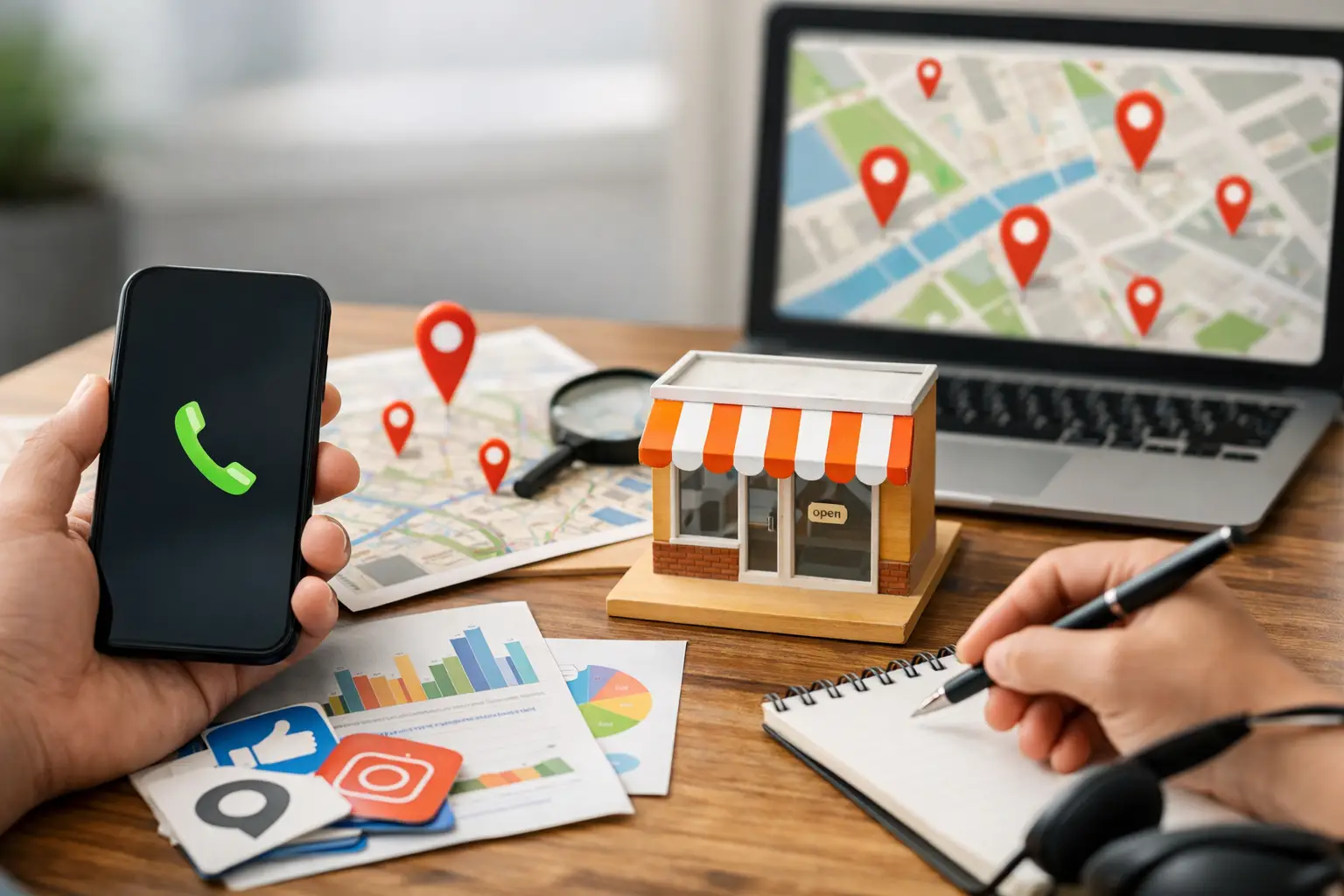
When a homeowner in Ocala searches for an emergency plumber, a new dentist, or a roofing estimate, they are not looking for a clever brand campaign. They are looking for a business they can trust enough to call now. The best local marketing strategies put your company in that decision path, then make it easy for a ready-to-buy customer to take action.
That sounds obvious, but many local businesses are still spending money on marketing that creates activity without creating revenue. They get social likes, vague traffic reports, and a website that looks acceptable but fails to generate calls. Meanwhile, a competitor with a stronger Google Business Profile, better reviews, faster site, and clearer offer keeps taking the jobs.
Local marketing is not about being everywhere. It is about owning the places where high-intent customers compare options and make a decision.
The Best Local Marketing Strategies Start With Visibility
You cannot convert customers who never see you. For service businesses, the highest-value visibility usually comes from Google Maps, local organic search, paid search ads, and referrals reinforced by a credible online presence.
Start by asking a harder question than, "Are we getting traffic?" Ask, "When people search for the services that make us money in the cities we serve, do we show up?" If the answer is no, your first priority is fixing the visibility gap, not posting more often on social media.
A local HVAC company, for example, may need to appear for searches such as "AC repair near me," "emergency AC repair," and "AC replacement in [city]." A restaurant needs a different mix: map visibility, current hours, menu information, reviews, and compelling photos. The strategy depends on how customers buy, but the principle does not change: show up when intent is highest.
Build a Google Business Profile That Earns the Click
Your Google Business Profile is often the first version of your business a prospect sees. If it has outdated hours, weak photos, unanswered reviews, an incorrect category, or no recent updates, you are handing credibility to the business listed above you.
Complete every relevant field accurately. Choose categories based on the services you actually want to sell. Add service areas where appropriate, write a clear business description, upload real photos of your team and completed work, and make sure your phone number and website information match what appears elsewhere online.
Reviews deserve special attention. More reviews alone are not the goal. You need recent, credible reviews that mention the work customers hired you to do. Build a simple request process after a successful job, while the customer's experience is fresh. Respond professionally to every review, including the difficult ones. Prospects read those responses to judge how you handle problems.
Turn Your Website Into a Lead-Generation Asset
Ranking is only half the job. If a prospect lands on your site and cannot quickly understand what you do, where you work, why you are credible, and how to contact you, the traffic has little value.
A local service website should lead with the customer's problem and your solution. Avoid vague headlines like "Quality You Can Trust" with no context. State the service, the geography when it matters, and the next action. A visitor should not have to hunt for a phone number, service area, financing information, or proof that you handle their specific need.
Strong local pages are built around real buying intent. Instead of one generic services page, create focused pages for meaningful services and locations you genuinely serve. Each page should offer useful details: what is included, common problems, the process, proof of experience, frequently asked questions, and a direct call to schedule or request an estimate.
Do not manufacture dozens of thin city pages with the same copy and a swapped location name. That approach rarely helps customers and often fails to perform long term. Build fewer pages with stronger information, local relevance, and a clear purpose.
Make Calling and Booking Frictionless
Most local leads come from a phone, often during a short break at work or while dealing with an urgent problem. Your site needs click-to-call functionality, short forms, fast load times, and clear calls to action on every major page.
Speed is not a cosmetic detail. A slow, cluttered site makes a business look less reliable before anyone speaks to your team. So do broken forms, confirmation pages that do not work, and unanswered calls. Marketing cannot overcome an operational leak forever.
Track calls, form submissions, booked appointments, and qualified leads. Then listen to a sample of calls or review lead notes. If leads are coming in but not closing, the issue may be sales follow-up, pricing, availability, or the quality of the inquiry rather than marketing itself. Accountability means finding the actual bottleneck.
Use Local SEO to Build an Asset, Not a Temporary Spike
Local SEO is the work of making your business easier for search engines and customers to understand, trust, and recommend. It includes technical website health, accurate business information, local relevance, useful service content, reviews, and reputable mentions of your business across the web.
Technical issues can quietly suppress performance. Pages that cannot be indexed, duplicate content, poor mobile usability, confusing site structure, and slow load times all make it harder to compete. A polished homepage does not fix a broken foundation.
Your local SEO plan should also account for how search is changing. Customers increasingly ask AI-powered search tools conversational questions such as, "Who is the best company for pool repair near me?" or "What should I ask before hiring a remodeling contractor?" Businesses with clear service information, consistent brand details, strong reviews, and credible expertise are better positioned to be cited or recommended.
That does not mean chasing every new platform. It means creating accurate, useful information that holds up wherever a customer searches.
Buy Demand Carefully With Google Ads
Google Ads can produce leads faster than SEO, especially when you are entering a competitive market, launching a new service, or trying to fill an immediate sales gap. But paid traffic is expensive when the account is poorly structured or the landing page is weak.
Start with high-intent searches tied to revenue. "Commercial electrician near me" is generally more valuable than broad awareness terms that attract researchers, job seekers, or people outside your service area. Use location targeting, exclude irrelevant searches, and send clicks to pages that match the ad's promise.
The trade-off is simple: ads stop when the budget stops. SEO and reputation-building take longer, but they can create compounding visibility over time. For many small businesses, the best approach is not choosing one or the other. It is using ads to capture immediate demand while local SEO builds a durable pipeline.
Reputation and Referrals Still Need a Digital System
Word of mouth remains one of the strongest sources of local business growth. But modern referrals rarely end with a recommendation. The referred customer still searches your name, reads your reviews, checks your website, and compares you with other options.
That means your online presence either confirms the referral or weakens it. Make every referral source easy to track. Ask new customers how they heard about you, record the answer consistently, and identify which partners, neighborhoods, past customers, or community relationships produce profitable work.
Stay visible to past customers after the sale. A seasonal reminder, maintenance offer, useful local update, or check-in can create repeat business and referrals without relying on constant discounting. The goal is to remain the obvious choice when the next need appears.
Measure Revenue, Not Marketing Noise
The fastest way to waste a local marketing budget is to judge performance by impressions, clicks, or followers alone. Those numbers may be useful diagnostics, but they are not the finish line.
Measure what moves the business: qualified phone calls, form leads, booked estimates, show rates, close rates, customer acquisition cost, and revenue by channel. If you sell high-ticket services, track the jobs that close after the first lead, not just the lead count.
This is where many businesses find the real opportunity. You may not need twice as much traffic. You may need faster call answering, clearer offers, a better estimate follow-up process, or a website that gives visitors a reason to choose you before they contact three competitors.
The right local marketing plan is not the one with the most tactics. It is the one that closes your biggest visibility and conversion gaps first. Fix what is costing you calls now, measure the result, and keep investing where the revenue proves you are winning.