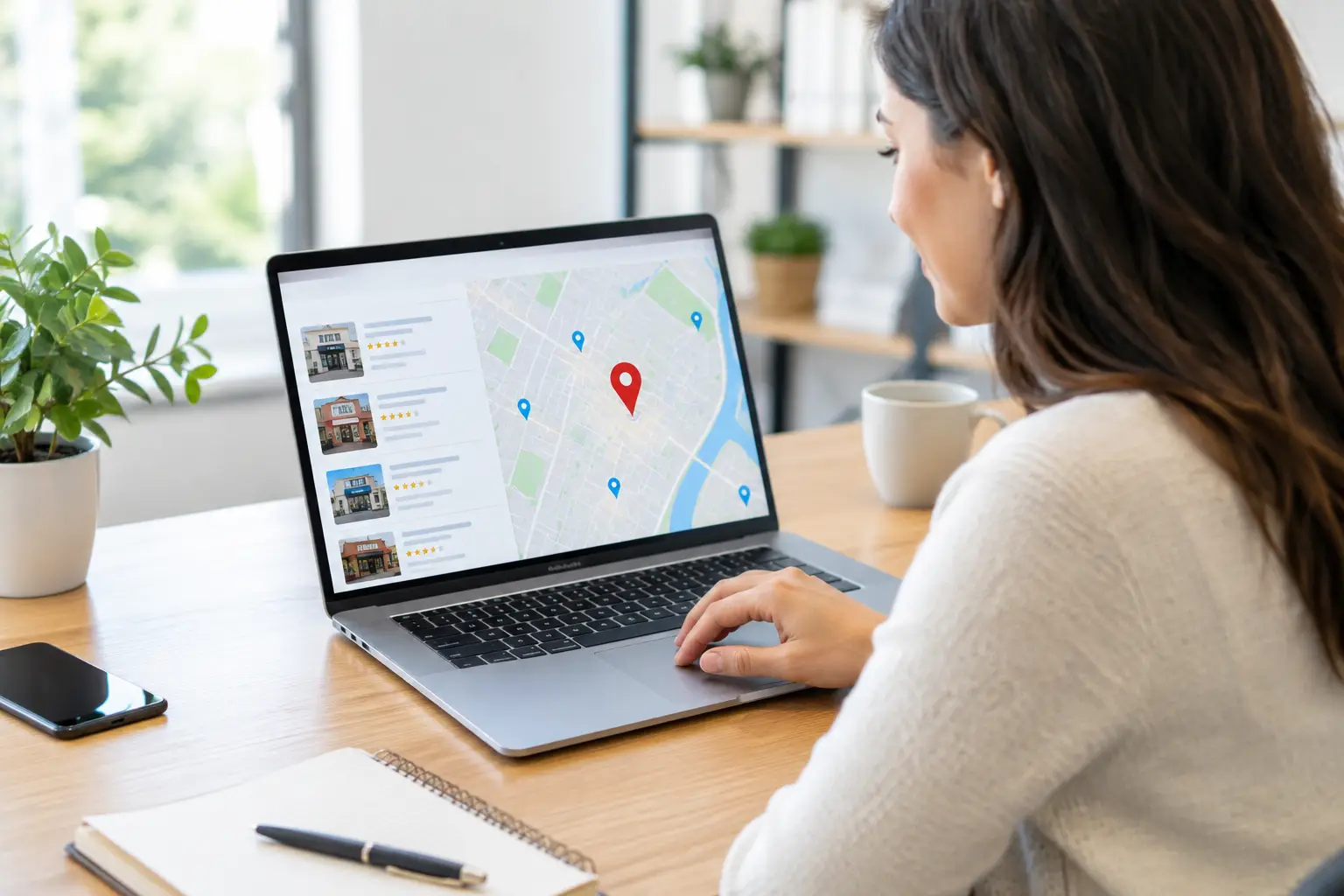
Your competitor is not winning local search because they found a magic keyword. More often, they are monitoring the map results, correcting bad business listings, collecting reviews, and responding before small problems become lost calls. A useful local SEO software review should help you identify the tools that support that work, not sell you another dashboard full of charts nobody acts on.
For a local business, software has one job: expose the visibility gaps costing you calls, appointments, and revenue. The right platform can show where you rank by neighborhood, find conflicting listings, and make review management less chaotic. It cannot replace a credible website, a well-managed Google Business Profile, or real operational follow-through.
What a Local SEO Software Review Should Measure
Most software comparisons obsess over feature counts. That is the wrong standard for an owner who needs more booked jobs. Judge a tool by whether it answers four practical questions: Can local customers find you? Do search engines trust your business information? Are you outranking competitors where customers actually search? Can you connect the work to leads?
That last question matters most. A rank tracker may report that you moved from position 12 to position 5, but the business result depends on the search term, the area, your offer, and whether your website or profile converts. Rankings are evidence. Phone calls, form submissions, direction requests, and closed revenue are the score.
Local search also changes block by block. A roofing company may appear in the map pack near its office but disappear 10 miles away in a high-value service area. Generic national rank reports often hide that problem. Look for tools that measure geographic visibility instead of giving one flattering average.
Local SEO Software Review: The Best Tools by Job
No single platform is the best answer for every business. A one-location plumber, a multi-location dental group, and an agency managing 30 client accounts need different levels of automation, reporting, and control.
BrightLocal for clear local reporting
BrightLocal is a strong fit for small businesses and agencies that need practical local rank tracking, citation auditing, review monitoring, and reporting without unnecessary complexity. Its grid-style local search reporting can reveal how visibility varies across a city or service area, which is far more useful than a single ranking number.
The trade-off is that it is primarily a local SEO operations platform. It is not designed to replace a full SEO suite for deep content research, backlink analysis, or broad technical audits. If local maps and listings are your main growth channel, that focus is an advantage. If your strategy depends heavily on organic content across a large site, pair it with another tool or an experienced SEO process.
Semrush Local for businesses that need broader SEO data
Semrush Local makes sense when local search is part of a larger SEO and competitive research program. It combines listing management and reputation features with keyword research, site auditing, competitive analysis, and content tools in the wider Semrush platform.
The benefit is range. You can investigate the organic search terms competitors own, find technical website issues, and manage local visibility from a single ecosystem. The downside is cost and complexity. Many owner-operators will only use a fraction of what they pay for. It becomes more valuable when someone is responsible for turning the data into priorities every month.
Whitespark for citation research and local opportunities
Whitespark has long been valuable for citation discovery and local rank tracking. It is particularly useful when a business has inconsistent name, address, or phone information across directories, industry sites, and local platforms. Those inaccuracies can weaken trust and send potential customers to the wrong number or outdated location.
Its citation tools are helpful during cleanup projects, new-location launches, and competitive research. Still, citation building is not a complete local SEO strategy. Many businesses waste time chasing hundreds of low-value directory listings while ignoring thin service pages, weak reviews, poor conversion paths, or an underperforming Google Business Profile. Use citation data to fix trust signals, then move to the issues closer to revenue.
Local Falcon for map-pack visibility
Local Falcon focuses on one question: where do you appear in Google Maps across a defined geographic area? Its visual grid scans make it easy to see local ranking strength and dead zones. For service businesses targeting Ocala, Inverness, Crystal River, or several surrounding communities, that geographic detail can quickly expose whether the market you want is actually seeing you.
This is a specialized tool, not an all-in-one platform. It will not manage listings or diagnose every technical SEO problem. Its strength is accountability. If a campaign claims to improve map rankings, Local Falcon-style reporting makes the result visible instead of relying on vague promises.
Moz Local for simpler listing distribution
Moz Local is built around business listing management and consistency. For a business with inaccurate, duplicate, or incomplete directory profiles, it can reduce manual cleanup and help distribute correct information across major listing sources.
It is a sensible option for owners who need a more straightforward starting point. However, listing distribution alone will not create local dominance. A clean digital footprint is the foundation, not the finish line. Before committing, verify that the directories it supports matter to your customers and industry rather than assuming every listing carries equal weight.
Yext for larger, complex location management
Yext is generally better suited to multi-location brands with a need for centralized control across a large network of listings, pages, and customer-facing information. If a company has dozens or hundreds of locations, inconsistent data can become an expensive operational problem. Centralization has real value at that scale.
For a single local business, it can be more platform than necessary. There is also a strategic concern: businesses should maintain ownership of their core profiles and records regardless of which vendor they use. Software should make you easier to find, not make your business data dependent on a contract you do not control.
How to Choose Without Paying for Features You Will Ignore
Start with the bottleneck, not the brand name. If your listings are wrong, prioritize citation and listing management. If customers are leaving competitors more reviews, focus on reputation workflows. If you do not know where you rank outside your immediate neighborhood, invest in local grid tracking. If your website has serious technical issues and no conversion tracking, local software is only one piece of the fix.
Ask for proof that the platform can report on the areas, keywords, and actions that matter to your business. A useful monthly report should show map visibility, organic visibility where relevant, listing accuracy, review trends, website leads, calls, and next actions. If it only shows impressions and a colorful score, it is not enough.
Also consider who will run it. The best software becomes wasted overhead when the owner logs in once, sees 47 warnings, and has no idea what to do first. Automation can send review requests and push listing updates. It cannot decide which service pages need rebuilding, whether a competitor is using a stronger offer, or why traffic is failing to convert.
The Scorecard That Matters More Than Software
Before buying anything, establish a baseline. Record your current Google Business Profile actions, phone calls, form leads, top local rankings, review volume, average rating, and the accuracy of your core listings. Then set a business target, such as 15 additional qualified calls per month or a higher share of map-pack visibility in a priority service area.
Review progress against that baseline every month. Expect some ranking movement, especially after Google updates or competitor activity. The pattern over time matters more than a single snapshot. If visibility improves but calls do not, investigate your profile categories, reviews, business hours, offer, landing pages, and call handling. Search visibility starts the conversation. Your business still has to win it.
A good software platform gives you evidence. A good local SEO strategy turns that evidence into decisions, execution, and measurable growth. Choose the tool that makes the next revenue-producing action obvious, then make sure someone owns the work.